
Category: Tips

  • From Bright White to Brittle: What Happens to Wedding Dresses Without Preservation

    From Bright White to Brittle: What Happens to Wedding Dresses Without Preservation

    Life after the wedding is hectic. You’re unpacking, organizing photos, and catching up with friends. In the midst of it all, your dress sits in a closet, seemingly safe. Maybe you’re keeping it “just in case” for a vow renewal, for sentimental reasons, or simply because it feels too special to rush through.

    But wedding dresses, with all their delicate beads and fine layers of fabric, don’t always stay the same just because they look fine today. Even without being worn, they can slowly shift in color, texture, and strength depending on what they’re exposed to. You don’t realize this is happening because it’s subtle and gradual.

    If you’ve ever wondered how a wedding dress goes from luminous to brittle, here’s what unfolds when preservation isn’t part of the plan.

    The First Year: Invisible Changes Begin

    During the first year after your wedding, your dress still looks fresh to the untrained eye. It may be hanging in a closet or resting in a standard garment bag, seemingly safe. But chemically, this is when deterioration quietly begins. 

    Without preservation, the shift from bright white to slightly muted tones starts at the molecular level long before it becomes visible.

    Oxidation Gains Momentum

    The biggest threat in year one is oxygen. Residues left behind from your wedding day begin reacting with air almost immediately.

    • Oxidation starts in areas exposed to sweat and body oils.
    • Light exposure accelerates subtle color changes.
    • Ivory fabrics begin to warm in tone along the seams.
    • Interior linings discolor faster than outer layers.

    These reactions are gradual, but once they begin, they continue unless professionally halted.

    Stains Set and Fabric Stress Develops

    At the same time, physical and chemical stress compounds. What looked like a clean hemline or an invisible spill starts to embed deeper into the fibers.

    • Stains settle deeper as humidity fluctuates.
    • Sugar residue from drinks or cake begins binding to fabric.
    • Fold lines create pressure that weakens fibers.
    • Heavy dresses stretch slightly at hanger points.

    By the end of year one, the changes are subtle, but they’ve taken root.

    Five Years Later: Yellowing and Fabric Weakening

    A woman holds a hanger from which her immaculate wedding dress hangs.

    Five years without preservation is when most brides notice something has changed. The dress may no longer appear bright white in natural light. Seams, folds, and hidden areas develop uneven tones. Fabric strength also begins declining, particularly in untreated natural fibers.

    Natural Fibers Slowly Break Down

    Silk, satin, and lace containing natural fibers slowly break down when exposed to ongoing oxidation. This isn’t dramatic at first, but it becomes measurable.

    • Silk loses tensile strength over time.
    • Cotton-based lace yellows unevenly.
    • Bodice linings darken along perspiration points.
    • Seams show deeper color concentration.

    The dress may still look intact, but its resilience has diminished compared to year one.

    Sugar Crystallization and Fold Stiffness

    Untreated sugary spills continue evolving inside the fabric. Over several years, they crystallize more firmly.

    • Sugar crystals attract moisture from the air.
    • Fabric in affected areas becomes stiff to the touch.
    • Folded sections resist unfolding smoothly.
    • Minor cracking sounds may occur when adjusting the skirt.

    At this stage, restoration becomes more complicated, though not always impossible.

    Ten Years Later: Brittleness and Permanent Damage

    A decade later, untreated dresses often show irreversible aging. What once felt fluid and soft may now feel fragile. Handling the dress requires caution. This is where the transition from cosmetic discoloration to structural compromise becomes clear.

    Fiber Breaks Down Over Time

    Extended oxidation weakens the internal structure of fibers. Natural fabrics are especially vulnerable.

    • Fiber breakdown causes thinning along folds.
    • Permanent yellowing resists standard cleaning.
    • Satin surfaces lose smoothness.
    • Lace becomes delicate and prone to splitting.

    The appearance of the dress may still hold beauty, but its durability has declined significantly.

    Seam Stress and Handling Risks

    Structural stress accumulates where the dress was folded or hung improperly. When unfolded after years in storage, damage can occur quickly.

    • Seams stress at waistlines and zipper tracks.
    • Threads weaken from acid exposure.
    • Increased risk of tearing occurs when adjusting layers.
    • Boning distortion arises from compression.

    At this point, even gentle handling can cause unexpected separation or fraying.

    Why Plastic Garment Bags Make It Worse

    Plastic garment bags feel protective, but they often accelerate aging. They trap air, moisture, and chemical vapors in direct contact with delicate fabric. Over time, this sealed environment intensifies oxidation rather than preventing it.

    Off-Gassing and Chemical Reactions

    Plastics release volatile compounds as they age. These compounds interact with fabric in confined spaces.

    • Off-gassing contributes to yellowing.
    • Direct plastic contact creates uneven discoloration.
    • Enclosed air increases chemical reaction rates.
    • Synthetic fibers may develop dull patches.

    What seems like simple protection can quietly compromise fabric integrity.

    Moisture Retention and Acid Transfer

    Moisture fluctuations inside plastic bags create microclimates. Even small amounts of humidity accelerate degradation.

    • Trapped moisture encourages oxidation.
    • Sugar residue absorbs humidity and hardens.
    • Acid migration from nearby cardboard surfaces deepens yellowing.
    • Folded areas darken faster than exposed panels.

    Without breathable, acid-free storage, the dress remains vulnerable year after year.

    What Professional Wedding Dress Preservation Does

    Professional preservation interrupts this entire timeline. Instead of allowing slow chemical reactions to continue, it removes the catalysts and stabilizes the fabric. The process is detailed, textile-specific, and designed for decades, not months. It transforms long-term risk into controlled protection.

    Specialized Cleaning and Inspection

    The first step is thorough, fabric-appropriate cleaning. This stage focuses on what you can’t see. Wedding dress cleaning and preservation specialists:

    1. Inspect all layers, seams, and embellishments.
    2. Identify invisible perspiration and sugar-based residues.
    3. Apply targeted cleaning methods based on fiber type.
    4. Remove contaminants before oxidation deepens.

    Early removal of these residues dramatically reduces long-term discoloration.

    Neutralizing Hidden Acids

    Cleaning alone isn’t enough. Preservation includes stabilizing the dress to prevent ongoing reactions, including:

    • Neutralizing perspiration acids embedded in fibers.
    • Treating high-risk zones, such as underarms and hems.
    • Reinforcing weakened stitching areas.
    • Correcting fold stress before long-term storage.

    This neutralization halts the internal aging process before it progresses further.

    Archival Storage and Structured Support

    The final step is protective packaging designed for textile longevity. Storage materials matter just as much as cleaning. Experts use:

    • Acid-free tissue cushioning folds to prevent sharp creases.
    • Archival storage boxes to reduce light exposure.
    • Breathable materials to minimize humidity buildup.
    • Structured folding to maintain silhouette and shape.

    Instead of deteriorating gradually, the dress rests in a stable environment designed to dramatically slow aging.

    Keep Bright White from Turning Brittle — Preserve with Martinizing Cleaners

    Don’t wait for time to fade your beautiful wedding dress. Let Martinizing Cleaners professionally clean, stabilize, and preserve your wedding dress the right way today. Since 1989, our wedding dress specialists have cared for delicate fabrics, intricate beadwork, and couture designs with a full-service process: Full Dress Assessment, Hand Treatment of Stains and Delicate Areas, Couture-Level Cleaning, Minor Repairs and Reinforcements, Final Pressing and Finishing, and Archival-Grade Packaging sealed for long-term storage.

    To make it easy for busy brides, we offer FREE Pickup and Delivery Service straight to your door. Rely on Danville’s most trusted name in wedding dress care to keep your dress safe, pristine, and ready to cherish for years.

    Call (925)-397-2225 or email martinizing@drycleaningca.com now to schedule yourprofessional Wedding Dress Cleaning and Preservation Service because your dress deserves expert care before time compromises its beauty.

  • Easy Ways to Refresh Sweaters That Smell Like Food or Fireplaces

    Easy Ways to Refresh Sweaters That Smell Like Food or Fireplaces

    Favorite sweaters tend to get worn again and again, especially during busy seasons filled with gatherings and long evenings indoors. With each wear, they pick up the atmosphere around them, including cooking aromas, smoke, and warmth from shared spaces.

    Because sweaters are often crafted from softer, more delicate materials, they need a lighter touch when it comes to care. So before reaching for water, detergent, or dry cleaning, it’s worth understanding which odor-removal techniques are gentle enough for sweaters. Many issues come from not knowing how to wash sweaters properly or washing them too often. 

    Here are easy, effective ways to refresh sweaters that smell like food or fireplaces while preserving their structure.

    Air Out Sweaters to Release Smoke and Cooking Odors

    Food and fireplace smells often cling to sweaters because wool and knits naturally absorb airborne oils and smoke particles. Before reaching for sprays or water, simple airflow can do more than you think, especially for lightly worn pieces.

    This method is gentle, fiber-safe, and ideal for wool, cashmere, and delicate blends. It’s often the first step professionals recommend because it lets odors dissipate without stressing the fabric.

    Choosing the Right Airing Location

    Fresh air matters, but placement makes the difference between success and lingering odor. A poor setup can actually trap smells instead of releasing them.

    • Opt for a shaded outdoor area like a covered porch or balcony.
    • Indoors, choose a room with cross-ventilation and open windows.
    • Avoid kitchens, closets, laundry rooms, or basements where odors concentrate.

    How to Hang or Lay the Sweater Properly

    How the sweater is positioned affects both odor release and garment shape. Supporting the fibers prevents stretching while maximizing airflow.

    • Lay sweaters flat on a clean towel or drying rack if they’re heavy.
    • If hanging, use a padded hanger and fold the sweater over the bar.
    • Ensure both sides are exposed to moving air.

    How Long Airing Should Take

    Airing isn’t instant, but it doesn’t need days either. Knowing when to stop prevents unnecessary exposure.

    • Light food odors often fade within 8–12 hours.
    • Fireplace or smoke smells may need a full overnight airing.
    • If odor remains after 24 hours, combine airing with another method.

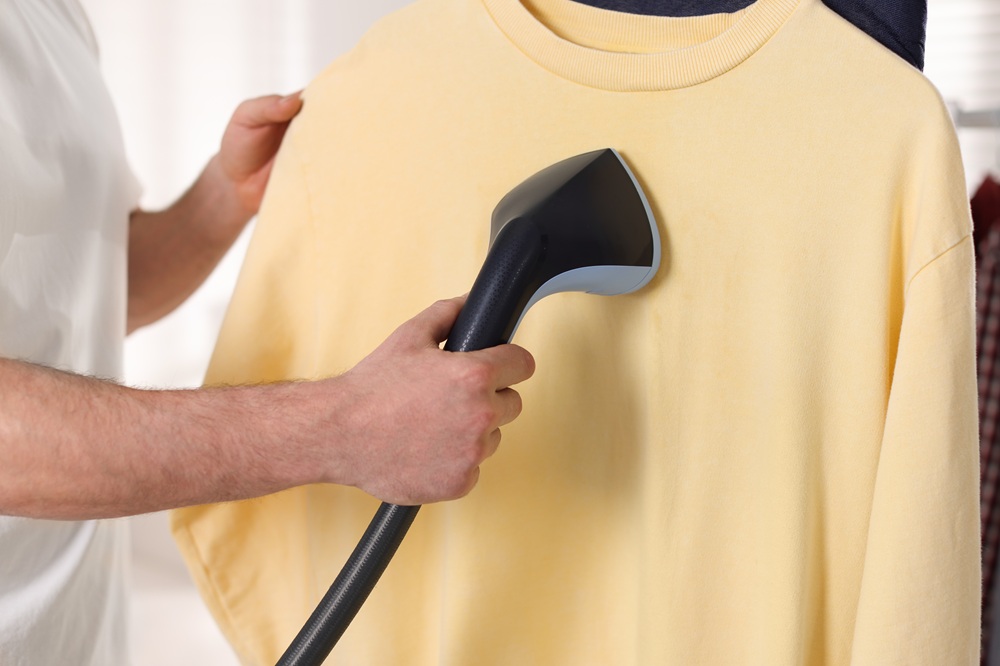
    Use a Steamer to Loosen Odor Molecules and Relax Fibers

    Steam works by opening up fibers just enough to release trapped odor molecules without soaking the garment. It’s a favorite technique in professional dry cleaning because it refreshes sweaters while preserving softness and structure.

    When done correctly, steaming is safe for wool, cashmere, and most knitwear. It’s especially useful when odors are mild but persistent.

    Setting Up Your Steamer Safely

    Before steaming, preparation protects both you and the sweater. A rushed setup can cause water spotting or heat damage.

    • Use distilled water to avoid mineral residue.
    • Allow the steamer to fully heat before starting.
    • Test steam on an inside seam first.

    Proper Steaming Technique for Sweaters

    Technique matters more than steam volume. Gentle, controlled passes are more effective than heavy saturation.

    • Hang the sweater so it falls naturally.
    • Hold the steamer 1–2 inches away from the fabric.
    • Move slowly from top to bottom, never lingering in one spot.

    When Steaming Is Not Enough

    Steam refreshes but doesn’t deep clean. Knowing its limits helps you decide the next steps.

    • Works best for smoke, food, and musty odors
    • Less effective on grease-based or set-in smells
    • If odor persists after two sessions, consider professional cleaning

    Use a Light Fabric Spray on Machine-Washable Sweaters Only

    Fabric sprays can be helpful, but only when used selectively and sparingly. For sturdy, machine-washable sweaters, they offer a quick refresh between wears. However, delicate fibers react poorly to chemicals, which can coat fibers and dull their natural feel. Professionals treat sprays as a last resort, not a primary solution.

    Identifying Sweaters That Can Handle Sprays

    Not all labels are created equal, so reading care instructions is essential. Fabric type determines whether sprays are safe.

    • Cotton and cotton-blend sweaters are usually safe.
    • Synthetic knits like acrylic or polyester tolerate light sprays.
    • Avoid wool, cashmere, alpaca, and silk blends.

    How to Apply Fabric Spray Correctly

    Overuse is the most common mistake. A light hand keeps fibers breathable and residue-free.

    • Hold the spray 8–10 inches away.
    • Mist lightly – never saturate.
    • Allow the sweater to air dry fully before wearing.

    Common Mistakes to Avoid

    Even “gentle” sprays can cause long-term issues if misused. Awareness helps prevent damage.

    • Spraying directly onto collars or cuffs repeatedly
    • Using scented sprays to mask, not remove, odors
    • Applying before storing the sweater

    Avoid Washing Too Frequently to Protect Sweater Fibers

    Frequent washing is one of the fastest ways to ruin a good sweater. Water, agitation, and detergent break down fibers, especially in wool and cashmere. Odor alone doesn’t always mean a sweater is dirty. Often, it just needs refreshing. Smart wear-and-care habits keep sweaters fresher for longer.

    How to Tell When Washing Is Truly Necessary

    Knowing the difference between odor and soil saves your sweaters. Visual and tactile cues matter.

    • Visible stains or spills require cleaning.
    • Sweaters worn with base layers need washing less often.
    • If airing removes the smell, washing isn’t needed.

    Extending Time Between Washes

    Small habits make a big difference in odor control. Prevention reduces the need for cleaning.

    • Wear an undershirt to limit body oils.
    • Allow sweaters to rest 24 hours between wears.
    • Store only clean, fully aired sweaters.

    The Long-Term Benefits of Less Washing

    Reduced washing isn’t just about convenience – it’s about preservation.

    • Fibers retain elasticity and softness
    • Colors stay richer and more even
    • Sweaters maintain their original shape

    Take Strongly Odored Sweaters to a Professional Cleaner

    Some odors go beyond DIY solutions. Heavy smoke, cooking grease, or long-set smells bond deeply with fibers and require professional treatment. Dry cleaners use controlled processes that neutralize odors without harming delicate knits. This option protects both the garment and your investment.

    Signs It’s Time for Professional Cleaning

    Ignoring severe odors can make them harder to remove later. Early action improves results.

    • Odor remains after airing and steaming.
    • The smell intensifies when the sweater warms up.
    • The sweater was exposed to smoke or grease for hours.

    What Professional Cleaners Do Differently

    Professional methods target odor at the molecular level. The process is designed for delicate fibers.

    • Specialized solvents that lift odor without water damage
    • Controlled drying to prevent shrinkage
    • Finishing techniques that restore softness and shape

    How to Prepare a Sweater for the Cleaner

    Clear communication helps cleaners choose the right treatment. A little prep goes a long way.

    • Point out odor source and exposure type.
    • Mention fiber content and past cleaning history.
    • Avoid home treatments before dropping it off.

    Call Martinizing Cleaners for Reliable Sweater Cleaning and Odor Removal

    Take the worry out of sweater care by trusting professionals who know exactly how to handle stubborn odors. When food, smoke, or fireplace smells won’t go away, Martinizing Cleaners offers reliable sweater cleaning and odor removal backed by experience and precision. We’re deeply familiar with the construction, fabrics, and finishing details, which means your wool, cashmere, and fine knits are treated with the respect they deserve.

    Our approach is meticulous. We never rush the process, and we never cut corners, because consistency is what sets apart our services. That’s why many of our clients have trusted us for years, relying on our unwavering standards, white-glove service, and thoughtful handling of their most valued pieces.

    To make expert care even easier, we offer FREE Pickup and Delivery Service, so your sweaters receive professional attention without disrupting your day. Call (925) 397-2225 or email martinizing@drycleaningca.com to consult with our team and experience sweater care you can genuinely trust.