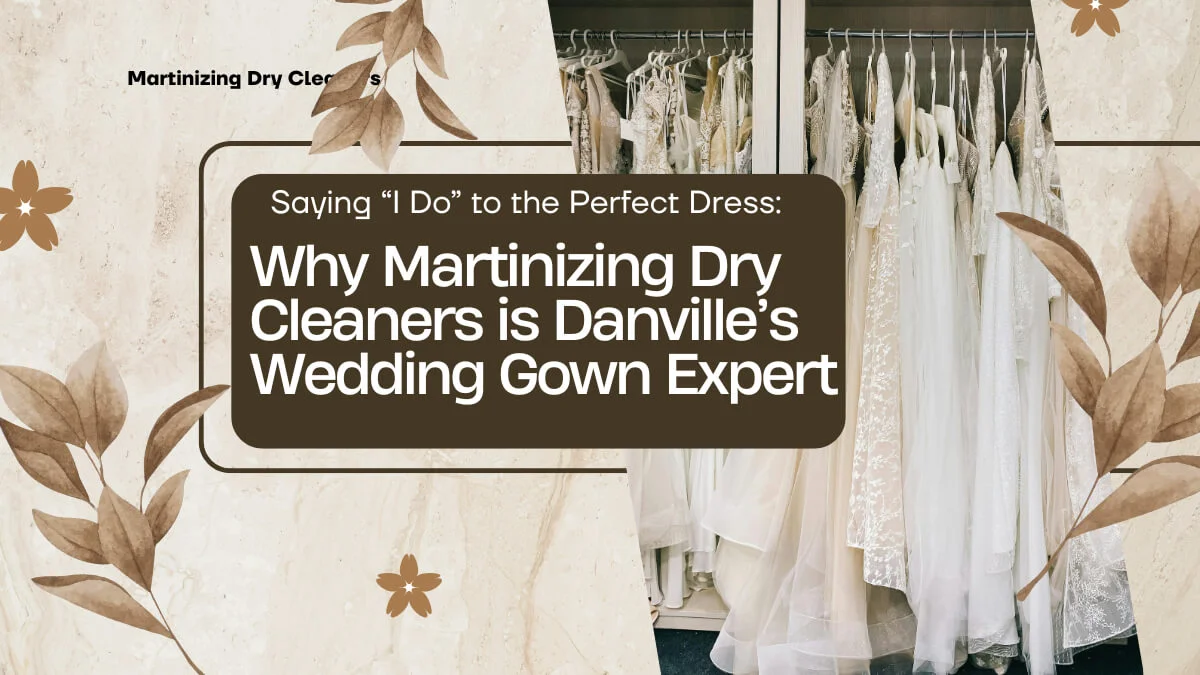
Nothing matches the magic of your wedding day, and your bridal gown sits at the very heart of those lifelong memories. Whether you are wearing a cherished family heirloom passed down through generations or a modern designer gown fresh off the boutique rack, your dress deserves royal treatment.
Finding elite bridal garment care in the San Ramon Valley should be effortless. Located right in the heart of Danville, California, Martinizing Dry Cleaners is the premier choice for East Bay brides. Our specialized, highly trained staff manages everything from custom bridal alterations and precision pressing to eco-friendly gown cleaning and museum-quality preservation. We ensure you walk down the aisle looking absolutely flawless.
As a proud “Best of the East Bay” titleholder, we have earned the trust of local brides for decades. Here is why the San Ramon Valley counts on us to protect their most precious garments.
1. A Perfect Fit: Master Wedding Gown Alterations in Danville
Every bride deserves to feel radiant, confident, and completely comfortable on her big day. Because wedding dresses rarely fit perfectly straight off the boutique rack, our in-house master tailors specialize in intricate, complex bridal alterations.
Whether your dress requires a multi-layered French bustle, delicate adjustments on fine tulle, or custom structural changes for a flawless silhouette, our artisans handle your gown with absolute precision. We host personalized, one-on-one fittings to ensure your dress moves beautifully with you, letting you dance the night away without a single worry.
2. Picture-Perfect Presentation: Professional Bridal Pressing
Wedding gowns feature luxurious, high-maintenance fabrics like silk, satin, organza, and chiffon. These materials demand specialized heat and steam techniques that only an experienced bridal presser can safely navigate. The last thing you want to worry about on the morning of your wedding is a rogue wrinkle.
Our team meticulously presses and finishes your gown, smoothing out every layer so the fabric drapes flawlessly. Once perfected, we pack and protect your dress for safe transport, ensuring you step into the spotlight looking immaculate.
hile your wedding day eventually comes to a close, the memories live on forever. After an unforgettable celebration, your gown might carry a few unwanted souvenirs—like grass stains from an outdoor photoshoot at a local vineyard, dust along the hemline from the dance floor, or an accidental champagne spill.
At Martinizing Dry Cleaners, we utilize advanced, eco-friendly cleaning technology that gently lifts stubborn stains and odors without damaging delicate beadwork, sequins, or fragile lace.
Once we clean and press your gown, we provide premium, archival-grade preservation services. We wrap your dress in acid-free tissue and place it inside a sealed, museum-quality viewing box. This protects the fabric from environmental aging, moisture, and yellowing for decades to come.
Proudly Serving the Heart of Danville & the San Ramon Valley
We love serving our vibrant community, including brides throughout Danville, Alamo, San Ramon, and Blackhawk. Our convenient downtown location makes it easy to cross wedding dress care off your bridal to-do list.
Coordinate your next fitting or drop-off with a visit to some of Danville’s most cherished local landmarks:
The Danville Oak Tree: Located on Diablo Road, this majestic, 350-year-old valley oak symbolizes deep roots and enduring strength—much like the beautiful vows you are preparing to take.
The Iron Horse Regional Trail: Want to save time? Many local couples utilize our effortless, convenient pickup and delivery service while enjoying a relaxing Saturday morning bike ride along the trail.
The Museum of the San Ramon Valley: Housed in the historic 1891 Southern Pacific Railroad Depot on Railroad Avenue, this landmark celebrates local heritage and preservation. At Martinizing Dry Cleaners, we share that exact same passion when it comes to preserving the personal history of your wedding gown.
Let Us Take the Stress Out of Your Dress
Planning a wedding involves countless moving parts. Let the proven gown experts at Martinizing Dry Cleaners handle the heavy lifting. With our decades of local trust, expert craftsmanship, and deep commitment to our community, we guarantee to treat your dress with the love and delicate care it deserves.
Are you ready to look your absolute best on your special day? Call or text us today, and let our family help you make your wedding unforgettable.
Contact Us Today
Phone: (925) 938-5000
Text: (925) 309-5298
Address: Danville, CA & Surrounding San Ramon Valley Areas
Silk, tulle, and lace hold onto things differently than everyday fabric. A spill that would wipe off a cotton shirt soaks into the weave of a wedding dress and stays there. A smudge of makeup that washes out of a regular blouse becomes a permanent shadow on organza if it’s not treated correctly.
Every type of stain a dress picks up at the reception behaves a little differently from the next, and the timing of how you respond matters as much as what you respond with.
Why the First 48 to 72 Hours After the Wedding Are Critical
How Stains Set Into Fabric Over Time
Fabric doesn’t just sit there waiting. From the moment a substance contacts the fibers, a slow chemical process begins.
Sugar-based stains from champagne, wine, and cake frosting oxidize as they dry, turning from clear or pale to yellow-brown.
Oils from food, body contact, and cosmetics bond to fibers at the molecular level and become progressively harder to lift without aggressive treatment.
Sweat carries proteins that stiffen and discolor fabric over days and weeks.
A dress that looks clean the morning after the wedding might be hiding stains that won’t become visible for two to four weeks. By then, many of them are permanent, or require aggressive chemical treatment that risks damaging delicate silk, satin, and beading. Time is the biggest factor separating a fully restored dress from one with stubborn yellowing.
Why You Should Not Attempt to Spot Clean the Dress Yourself
When brides notice a stain, the instinct is to dab it immediately. That’s understandable. But rubbing or blotting a stain on silk, satin, or organza can spread it wider and drive it deeper into the fibers.
Water alone can leave permanent watermarks on many bridal fabrics. And over-the-counter spot treatments, including hydrogen peroxide and commercial stain removers, can bleach dyes, weaken embroidery threads, or dissolve the adhesives that hold beading in place.
The best thing you can do right now is leave the stains exactly as they are, store the dress properly, and take it to a professional cleaner who works with bridal dresses within that 72-hour window.
Do not spot clean, rub, or apply water to any area of the dress before taking it in. Untouched stains are almost always easier for professionals to remove than those that have been partially treated.
The Most Common Stains Found on Wedding Dresses and What Causes Them
1) Champagne and White Wine: Invisible Now, Yellow Later
Champagne and white wine are sugar-based and nearly colorless when fresh. This means a dress can look perfectly clean the day after the wedding and still be coated in stains that haven’t appeared yet.
As these sugars oxidize over the following days and weeks, they turn yellow to amber. On ivory or white fabric, the discoloration becomes obvious fast. On champagne or blush dresses, it can blend in at first, then deepen further over time. If you toasted at any point during the night, or stood near anyone who did, assume your dress picked up some of this.
2) Wedding Cake Frosting and Food
Cake stains are tricky because they contain two very different types of substances, sugar and fat, that require different cleaning chemistry to address. Buttercream frosting, which is oil based as well as sugary, tends to leave a greasy residue that sets into fabric quickly. Fondant is mostly sugar and water, but it still oxidizes and yellows without treatment.
If the cutting of the cake involved any contact with your dress (or if the bouquet toss caused you to bend toward the dessert table), there’s a good chance food is somewhere on that dress, even if it’s not visible.
3) Makeup: Foundation, Lipstick, and Blush Transfer
Oil-based foundations are among the most stubborn stains on bridal fabric. They don’t rinse out with water and can permanently alter the surface texture of silk if they’re rubbed. Foundation typically shows up on the neckline and bodice, right at the points of contact when you leaned in for photos or embraced guests.
Lipstick and blush transfer also appear on sleeves and the inner bodice. Nearly every bride who receives more than a handful of hugs during the reception ends up with some form of makeup contact, especially on lighter-toned fabrics.
4) Grass, Dirt, and Outdoor Venue Debris
For outdoor and garden ceremonies, the train and hem are almost guaranteed to collect grass, soil, and organic debris. Grass stains contain chlorophyll, which is essentially a plant dye. It bonds aggressively to natural fibers and does not respond to basic cleaning methods. The longer it sits, the more it behaves like a permanent dye.
Dirt ground into hems is also a concern. Rubbing or scrubbing dry soil without the proper treatment can abrade delicate lace, cause snags in embroidery, and press particles further into the weave. These stains need to be handled by someone who understands how to treat natural dye contamination on bridal fabrics.
5) Perspiration and Body Oils Along the Bodice and Underarms
Wearing a fitted dress for eight to twelve hours on one of the most physically and emotionally intense days of your life means your dress absorbs a significant amount of sweat and natural skin oils. This is entirely normal, and it’s not something most brides notice until weeks or months later when the fabric starts to yellow or stiffen along the bust and underarm areas.
Perspiration contains salts and proteins that degrade fabric over time and cause yellowing that gets worse the longer it’s left untreated. This is one of the primary reasons professional wedding dress cleaning matters even when the dress looks clean – the damage may already be underway, just not visible yet.
6) Wax and Candle Drips
Candlelit ceremonies and receptions are beautiful. They’re also a real hazard for fabric. If you walked near candelabras, had a unity candle ceremony, or stood beside pillar candles during photos, there’s a chance you picked up wax drips on the skirt, sleeves, or hem.
The instinct to pick off hardened wax is understandable, but it can pull threads, damage embellishments, and lift beading adhesive. Wax removal requires professional heat treatment to soften the wax and lift it away from fibers without causing damage. Leave it alone until it reaches a professional’s hands.
What to Do With Your Wedding Dress in the Days After the Wedding
How to Store the Dress Safely Until You Can Take It In
Before you can get the dress to a cleaner, store it in a way that doesn’t make things worse:
Hang it on a wide, padded hanger to prevent shoulder distortion.
Keep it in a cool, dry space away from direct sunlight. UV exposure yellows fabric quickly.
Do not store it in a plastic garment bag. Plastic traps moisture and promotes mildew and yellowing. A breathable cotton garment bag or even a clean sheet draped loosely over the dress is a better short-term option.
Do not fold and box the dress until after it’s been professionally cleaned and properly packaged for preservation.
What Information to Give Your Cleaner When You Drop Off
The more you can tell your cleaner, the better the outcome. Before you take in the dress, take a few minutes to:
Look over the dress and note any areas where you remember contact with food, drinks, or other substances.
Take a quick phone photo of any visible stains and the general condition of the hem, bodice, and sleeves.
Jot down what caused specific stains if you know – buttercream versus fondant, red wine versus white, grass versus dirt. Different substances need individual treatment.
Even if you can’t identify specific stains, flagging areas of concern helps the cleaner prioritize treatment and avoid missing something that later becomes a problem.
Wedding Dress Cleaning vs. Preservation: What’s the Difference?
Many brides assume that having the dress cleaned is all they need to do. Cleaning is the essential first step, but it’s not the whole picture, especially if you plan to keep the dress long term.
Why Cleaning Alone Isn’t Enough for Long-Term Storage
Professional cleaning removes current stains, surface soil, and contaminants. But once the dress is clean, how you store it determines whether it stays that way for years or starts to yellow and degrade within the next decade.
Wedding dress preservation involves more than a cleaned dress in a box. The process uses acid-free tissue paper to cushion folds and prevent permanent creasing, an acid-free preservation box that blocks light and prevents off-gassing from standard cardboard, and a sealed environment that limits exposure to humidity and air pollutants.
Preservation is what protects the dress if you want to pass it down, display it, or simply know it’s in good condition twenty years from now. It’s also worth considering resale, since a professionally cleaned and preserved dress in original condition holds significantly more value than one that has yellowed from improper storage.
A Note on Timing
Wedding Dress Preservation Service is most effective when performed right after cleaning, while the fabric is freshest and fully treated. Waiting months between cleaning and preservation creates a gap where the dress is still vulnerable.
Remove Reception Stains Before They Become Permanent – Trust Martinizing Cleaners for Expert Wedding Dress Care
No bride wants hidden spills and oils turning into permanent discoloration months after the celebration. Trust Martinizing Cleaners to remove stains with couture-level care and preserve your dress using museum-quality materials backed by decades of wedding dress expertise.
Pleasanton, California, perfectly balances rich historic charm with the high-energy pulse of a modern business hub. Whether you are attending a corporate summit at Hacienda Business Park, celebrating a sunset wedding at a Livermore Valley Vineyard, or enjoying a family retreat to the East Bay, one universal travel truth remains: your wardrobe defines your confidence.
Living out of a suitcase is a recipe for wrinkles and unexpected spills. While hotel irons often do more harm than good to delicate fabrics, travelers and residents in Tri-Valley have a secret weapon. To stay polished and professional, savvy visitors rely on Martinizing Dry Cleaners of the East Bay—the highest-rated dry cleaners in Pleasanton and Danville.
Solving the “Suitcase Struggle” in the Tri-Valley
Solve the Suitcase Struggle with Martinizing Dry Cleaners
You arrive at The Rose Hotel or the AC Hotel Pleasanton only to find your boardroom attire crisscrossed with flight wrinkles. Perhaps after a night on Main Street, a drop of local Cabernet finds its way onto your silk blouse.
In these moments, you need more than a standard laundromat; you need a professional team that understands the urgency of travel. We provide seamless, high-end garment care and professional laundry services in Pleasanton so you can focus on your itinerary instead of your chores.
Why Martinizing is the Authority for East Bay Travelers
We separate ourselves from basic hotel laundry services by combining three pillars of excellence: convenience, advanced technology, and localized expertise.
1. Unmatched Convenience: Free Pickup and Delivery in Pleasanton
Pick Up and Delivery Dry Cleaning Pleasanton Ca.
On vacation or a busy work week, time is your most valuable currency. You shouldn’t spend your morning navigating I-580 traffic or searching for a storefront. We offer Free Dry Cleaning Pickup and Delivery directly to your accommodations or office. Whether you are staying at a luxury hotel, a boutique Bed and Breakfast, or a corporate Airbnb near Stoneridge, our drivers whisk your garments away and return them pristine—without you lifting a finger.
2. Speed That Matches the Hacienda Business Park Pace
The business world moves fast, and your vacation time is precious. If you have a presentation tomorrow morning and a suit that needs an immediate refresh, our Same-Day Dry Cleaning service is a lifesaver. This level of responsiveness is why we are the premier choice for professionals working in the Pleasanton business corridor.
3. Eco-Friendly “GreenEarth” Technology
Travel gear is an investment. We protect that investment using GreenEarth® Cleaning technology. This environmentally friendly process replaces harsh petrochemicals with liquid silicone—an odorless, non-toxic alternative that is gentle on both your skin and the California environment. Your clothes return soft, vibrant, and free of that “chemical” smell common with older dry cleaning methods.
Red Carpet Treatment for Couture & Luxury Wear
Pleasanton hosts some of Northern California’s most sophisticated social events. From elite corporate galas to high-society fundraisers at the Castlewood Country Club, the fashion often rivals the runways of Milan.
We are the trusted specialists for high-stakes garments. Our team recently restored a Chanel tweed jacket to pristine condition just hours before an opening night at the Firehouse Arts Center. We also specialize in expert steaming for floor-length Gucci gowns and intricate couture, ensuring every pleat and bead is red-carpet ready.
More Than Just Dry Cleaning: A Full Suite of Services
As a staple of the Pleasanton community for over 35 years, we offer a comprehensive range of textile care:
Professional Wash, Fluff, and Fold: Perfect for families or extended stays. We return your everyday wear perfectly folded and ready for your dresser.
Expert Alterations & Tailoring: Did you find the perfect outfit at Stoneridge Shopping Center? Our on-site tailors provide quick hems and adjustments.
Outerwear & Leather Restoration: The Northern California fog can be tough on suede and leather. Our specialized process restores natural oils to your favorite jackets.
Alterations and Tailoring Martinizing Dry Cleaners Pleasanton Ca
The Martinizing Guarantee: 100% Peace of Mind
Voted “Best of the East Bay” year after year, our reputation is built on a 100% commitment to excellence. We offer a money-back guarantee because we know you are trusting us with your most expensive wardrobe pieces.
Final Thoughts for Your Pleasanton Stay
No Wasted Time in the Laundromat. Martinizing Dry Cleaners will Pick Up and Deliver back to you.
Pleasanton is a city meant to be enjoyed—from walks through Shadow Cliffs Regional Recreation Area to closing deals in sunlit boardrooms. Don’t let a wrinkled collar or a stray stain distract you from the beauty of the East Bay.
Look your best. Feel your best. Choose the most convenient dry cleaning in Pleasanton.
San Ramon, California, serves as the premier hub of the East Bay. Whether you are visiting for a high-stakes meeting at Bishop Ranch, exploring the rugged trails of Las Trampas Regional Wilderness, or attending a black-tie gala at the City Center, you should spend your time soaking in the West Coast sun—not fighting wrinkles in a hotel room.
For the modern traveler, stains and luggage-crushed clothes are more than an inconvenience; they are “vacation killers.” While hotels often charge exorbitant fees for subpar laundry results, Martinizing Dry Cleaning of the East Bay provides a seamless, concierge-level alternative that guarantees you look your best.
The Traveler’s Dilemma: Luggage vs. Luxury
Business Meeting come prepared with Martinizing Dry Cleaners
We have all experienced it: you unpack your favorite designer silk dress or a custom-tailored blazer only to find it looking like a crumpled roadmap. Or perhaps your San Ramon stay extended unexpectedly, and your wardrobe needs a mid-week refresh.
In a refined city like San Ramon, a crisp appearance is your best calling card. Whether you are networking at a corporate summit or attending a last-minute social event, confidence starts with a flawless fit.
Expert Tip: Don’t let a crushed collar undermine your professional presence. A professional pressing from Martinizing Dry Cleaning restores your travel wardrobe to “showroom floor” quality instantly.
Why Martinizing is the Authority for San Ramon Travelers
When you are away from home, you need three things: convenience, speed, and trust. Since 1989, Martinizing Dry Cleaning of the East Bay has delivered these with a level of sophistication that matches the local lifestyle.
Free Pickup and Delivery: This is the ultimate travel game-changer. Whether you are staying at the Marriott San Ramon or upscale corporate housing, we come to you. Schedule your service via our app or a quick text. Avoid the I-680 traffic and spend your time at your meeting, not at a laundromat.
Wash-Fluff-Fold Service: Not every item requires dry cleaning. Our Wash and Fold service is a lifesaver for casual wear and workout gear. We return your clothes cleaned, neatly folded, and fresh—perfect for your next hike on the Iron Horse Trail.
Expertise in Designer Labels: Giving high-end couture to a stranger is stressful. Our specialists are experts in delicate fabrics, wedding dress preservation, and luxury brands, ensuring your investments are handled with extreme care.
Stay Red Carpet Ready in the East Bay
Stay Red Carpet Ready Martinizing Dry Cleaners San Ramon Ca
San Ramon is a frequent stage for major Bay Area events. From tech summits to vineyard weddings in nearby Livermore, the fashion stakes remain high.
Imagine attending a private gallery opening at the San Ramon Performing Arts Center. To complement the elegance of the evening—perhaps a hand-beaded gown or a razor-sharp Dior suit—your attire must be flawless. Martinizing Dry Cleaning helps you achieve that “supreme look” without you ever having to step out of your hotel suite.
The Martinizing Difference: Convenient, Eco-Friendly & Professional
Our commitment to excellence is grounded in the latest garment technology. We use environmentally friendly solvents that are tough on odors but gentle on your skin and the planet. This is particularly vital for travelers who may have sensitivities to the harsh industrial chemicals used in standard hotel laundry services.
Reclaiming your time is easier than ordering room service:
Download the Martinizing App: Manage your orders and track your delivery with a few taps.
Text or Call: Reach our team at (925) 938-5000 to coordinate a pickup directly from your hotel front desk or workplace.
Enjoy San Ramon: Go enjoy a meal at City Center Bishop Ranch or indulge in some retail therapy while we handle the work.
Final Thoughts
Travel should be about the experience, not the hassle of chores. By outsourcing your garment care to the premier San Ramon dry cleaners, Martinizing Dry Cleaning of the East Bay, you can relax knowing you’ll be the best-dressed person in any room you walk into.
Life after the wedding is hectic. You’re unpacking, organizing photos, and catching up with friends. In the midst of it all, your dress sits in a closet, seemingly safe. Maybe you’re keeping it “just in case” for a vow renewal, for sentimental reasons, or simply because it feels too special to rush through.
But wedding dresses, with all their delicate beads and fine layers of fabric, don’t always stay the same just because they look fine today. Even without being worn, they can slowly shift in color, texture, and strength depending on what they’re exposed to. You don’t realize this is happening because it’s subtle and gradual.
If you’ve ever wondered how a wedding dress goes from luminous to brittle, here’s what unfolds when preservation isn’t part of the plan.
The First Year: Invisible Changes Begin
During the first year after your wedding, your dress still looks fresh to the untrained eye. It may be hanging in a closet or resting in a standard garment bag, seemingly safe. But chemically, this is when deterioration quietly begins.
Without preservation, the shift from bright white to slightly muted tones starts at the molecular level long before it becomes visible.
Oxidation Gains Momentum
The biggest threat in year one is oxygen. Residues left behind from your wedding day begin reacting with air almost immediately.
Oxidation starts in areas exposed to sweat and body oils.
Light exposure accelerates subtle color changes.
Ivory fabrics begin to warm in tone along the seams.
Interior linings discolor faster than outer layers.
These reactions are gradual, but once they begin, they continue unless professionally halted.
Stains Set and Fabric Stress Develops
At the same time, physical and chemical stress compounds. What looked like a clean hemline or an invisible spill starts to embed deeper into the fibers.
Stains settle deeper as humidity fluctuates.
Sugar residue from drinks or cake begins binding to fabric.
Fold lines create pressure that weakens fibers.
Heavy dresses stretch slightly at hanger points.
By the end of year one, the changes are subtle, but they’ve taken root.
Five Years Later: Yellowing and Fabric Weakening
A woman holds a hanger from which her immaculate wedding dress hangs.
Five years without preservation is when most brides notice something has changed. The dress may no longer appear bright white in natural light. Seams, folds, and hidden areas develop uneven tones. Fabric strength also begins declining, particularly in untreated natural fibers.
Natural Fibers Slowly Break Down
Silk, satin, and lace containing natural fibers slowly break down when exposed to ongoing oxidation. This isn’t dramatic at first, but it becomes measurable.
Silk loses tensile strength over time.
Cotton-based lace yellows unevenly.
Bodice linings darken along perspiration points.
Seams show deeper color concentration.
The dress may still look intact, but its resilience has diminished compared to year one.
Sugar Crystallization and Fold Stiffness
Untreated sugary spills continue evolving inside the fabric. Over several years, they crystallize more firmly.
Sugar crystals attract moisture from the air.
Fabric in affected areas becomes stiff to the touch.
Folded sections resist unfolding smoothly.
Minor cracking sounds may occur when adjusting the skirt.
At this stage, restoration becomes more complicated, though not always impossible.
Ten Years Later: Brittleness and Permanent Damage
A decade later, untreated dresses often show irreversible aging. What once felt fluid and soft may now feel fragile. Handling the dress requires caution. This is where the transition from cosmetic discoloration to structural compromise becomes clear.
Fiber Breaks Down Over Time
Extended oxidation weakens the internal structure of fibers. Natural fabrics are especially vulnerable.
Fiber breakdown causes thinning along folds.
Permanent yellowing resists standard cleaning.
Satin surfaces lose smoothness.
Lace becomes delicate and prone to splitting.
The appearance of the dress may still hold beauty, but its durability has declined significantly.
Seam Stress and Handling Risks
Structural stress accumulates where the dress was folded or hung improperly. When unfolded after years in storage, damage can occur quickly.
Seams stress at waistlines and zipper tracks.
Threads weaken from acid exposure.
Increased risk of tearing occurs when adjusting layers.
Boning distortion arises from compression.
At this point, even gentle handling can cause unexpected separation or fraying.
Why Plastic Garment Bags Make It Worse
Plastic garment bags feel protective, but they often accelerate aging. They trap air, moisture, and chemical vapors in direct contact with delicate fabric. Over time, this sealed environment intensifies oxidation rather than preventing it.
Off-Gassing and Chemical Reactions
Plastics release volatile compounds as they age. These compounds interact with fabric in confined spaces.
Off-gassing contributes to yellowing.
Direct plastic contact creates uneven discoloration.
Enclosed air increases chemical reaction rates.
Synthetic fibers may develop dull patches.
What seems like simple protection can quietly compromise fabric integrity.
Moisture Retention and Acid Transfer
Moisture fluctuations inside plastic bags create microclimates. Even small amounts of humidity accelerate degradation.
Trapped moisture encourages oxidation.
Sugar residue absorbs humidity and hardens.
Acid migration from nearby cardboard surfaces deepens yellowing.
Folded areas darken faster than exposed panels.
Without breathable, acid-free storage, the dress remains vulnerable year after year.
What Professional Wedding Dress Preservation Does
Professional preservation interrupts this entire timeline. Instead of allowing slow chemical reactions to continue, it removes the catalysts and stabilizes the fabric. The process is detailed, textile-specific, and designed for decades, not months. It transforms long-term risk into controlled protection.
Specialized Cleaning and Inspection
The first step is thorough, fabric-appropriate cleaning. This stage focuses on what you can’t see. Wedding dress cleaning and preservation specialists:
Inspect all layers, seams, and embellishments.
Identify invisible perspiration and sugar-based residues.
Apply targeted cleaning methods based on fiber type.
Remove contaminants before oxidation deepens.
Early removal of these residues dramatically reduces long-term discoloration.
Neutralizing Hidden Acids
Cleaning alone isn’t enough. Preservation includes stabilizing the dress to prevent ongoing reactions, including:
Neutralizing perspiration acids embedded in fibers.
Treating high-risk zones, such as underarms and hems.
Reinforcing weakened stitching areas.
Correcting fold stress before long-term storage.
This neutralization halts the internal aging process before it progresses further.
Archival Storage and Structured Support
The final step is protective packaging designed for textile longevity. Storage materials matter just as much as cleaning. Experts use:
Acid-free tissue cushioning folds to prevent sharp creases.
Archival storage boxes to reduce light exposure.
Breathable materials to minimize humidity buildup.
Structured folding to maintain silhouette and shape.
Instead of deteriorating gradually, the dress rests in a stable environment designed to dramatically slow aging.
Keep Bright White from Turning Brittle — Preserve with Martinizing Cleaners
Don’t wait for time to fade your beautiful wedding dress. Let Martinizing Cleaners professionally clean, stabilize, and preserve your wedding dress the right way today. Since 1989, our wedding dress specialists have cared for delicate fabrics, intricate beadwork, and couture designs with a full-service process: Full Dress Assessment, Hand Treatment of Stains and Delicate Areas, Couture-Level Cleaning, Minor Repairs and Reinforcements, Final Pressing and Finishing, and Archival-Grade Packaging sealed for long-term storage.
To make it easy for busy brides, we offer FREE Pickup and Delivery Service straight to your door. Rely on Danville’s most trusted name in wedding dress care to keep your dress safe, pristine, and ready to cherish for years.
Weddings sweep you up in a beautiful rush of moments, big and small. And while you’ll be glowing with excitement, your dress may already be starting to change color. Even something as simple as brushing against the dance floor or carrying the hem outside can leave behind dirt and oils. And, every day that passes increases the risk of stains setting, fabrics yellowing, and delicate details weakening.
Cleaning and preserving your dress at the right time is the only way to protect it. Each stage, from the first day to the first month, plays a role in preventing damage. In this post, let’s explore the timeline together, so you’ll know what to do now, what can wait, and what should never be put off.
Within 24 Hours: Handle Your Dress With Care
The first day after your wedding is when your dress is at its most vulnerable. Champagne splashes, food drips, makeup smudges, and dirt along the hemline may not look too serious at first, but they can cause lasting damage if ignored. At this point, your main responsibility isn’t deep cleaning; it’s protecting the dress until professionals can take over.
Immediate Care Actions To Take
Here’s what to do within 24 hours:
Do this
Purpose
Hang the dress properly
Use a padded hanger and avoid wire hangers that can distort the shoulders.
Keep it away from heat and light
Prevents fabric discoloration and weakening caused by direct sun or heat.
Handle with clean hands
Oils and residue from skin can leave behind invisible marks.
Store in a breathable garment bag
Plastic bags trap moisture and encourage mildew — use cotton instead.
By taking these small steps immediately, you reduce the risk of accidental damage and buy yourself valuable time before professional treatment. Even if your dress looks spotless, assume there are invisible stains, such as perspiration or clear beverages, that could oxidize into yellow patches later.
Within the First 48 Hours: Schedule Professional Cleaning
Two days after the wedding is when action becomes critical. Stains begin to settle deeper into delicate fibers, making them harder to remove the longer they sit. Professional cleaning within 48 hours ensures that both visible and hidden marks are treated before they have the chance to oxidize, darken, or become permanent.
Timing Matters for Cleaning
Here’s what to keep in mind when scheduling cleaning in this window:
Factor
Why It’s Important
Oxidizing stains
Spills like champagne, white wine, or soda can turn yellow or brown if untreated.
Delicate fabrics
Materials like silk or lace absorb residues faster, making immediate cleaning vital.
Professional expertise
Trained cleaners know how to safely treat beading, sequins, lace, and embroidery.
Long-term preservation success
Prompt cleaning ensures your dress is in the best condition before preservation begins.
By scheduling professional wedding dress cleaning within 48 hours, you take the single most important step to prolong the life of your dress. This is especially important for dresses with intricate detailing or layers, as these often conceal stains that are hard to spot at home.
Within the First Week: Address Stains Before They Set
If 48 hours have passed without professional cleaning, don’t panic, but don’t delay further either. Within a week, stains that once seemed minor can begin to alter the look of the fabric and even weaken its fibers. Knowing which stains are most urgent helps you act quickly and effectively.
Stains You Can’t Ignore
Use this quick reference to understand how stains evolve if not addressed promptly:
Type of Stain
Risk If Left Untreated
Makeup (foundation, lipstick)
Can seep into fabric layers, leaving dark marks and greasy outlines.
Dirt and grime on the hemline
Hardens and becomes deeply embedded in layers of tulle and lace.
Perspiration or body oils
May appear invisible at first but yellow over time and weaken fibers.
Food or beverage stains
Sugar residues oxidize, leading to brown or rust-colored patches.
If you’re still within the first week, it’s not too late. Take your dress to a preservation specialist right away and mention all stains you’re aware of, even if they seem small. Transparency allows cleaners to apply the correct treatment and prevent permanent damage.
Within the First Month: Begin the Preservation Process
Once you reach the one-month mark, cleaning alone is no longer enough. Even if your dress has been freshly treated, it now needs proper preservation to stay safe for decades.
Core Parts of Dress Preservation
Here’s what a professional preservation process includes:
Preservation Step
Purpose
Acid-free storage materials
Prevents fabric breakdown and discoloration from acidic tissue or cardboard.
Climate-controlled packaging
Protects against mold, mildew, and humidity-related damage.
Sealed preservation box
Reduces air exposure that causes yellowing of whites and ivories.
Careful folding and layering
Prevents permanent creases and stress on delicate embellishments.
Beginning the preservation process within one month ensures your dress is not only clean but also fully protected for decades to come. This is the stage that turns your dress into a true heirloom – something you can pass down, repurpose, or simply treasure as a keepsake.
Don’t Leave Your Wedding Dress to Chance – Trust Martinizing Cleaners for Timely, Professional Care
Even the finest lace and silk need professional care, and your wedding dress deserves nothing less. At Martinizing Cleaners, we combine over 60 years of expertise with a couture-level cleaning process, from hand-treating delicate stains to performing minor repairs, final pressing, and finishing. Every dress is then carefully packaged in archival-grade materials and sealed for long-term storage so it can be cherished for generations.
Whether your dress is vintage lace, modern silk, or heavily embellished couture, our cleaning and preservation specialists provide meticulous care for every style. Plus, with our FREE Pickup and Delivery Service in Danville and nearby areas, protecting your dress is as effortless as it is essential.